The best active date is the one both people can enjoy at a comfortable pace, without needing to prove fitness or accept unexpected physical contact. Our five formats for Vietnam in 2026 are a short conversation walk, casual badminton, a beginner dance lesson, a carefully chosen easy cycling route, and a coached movement class. Choose by experience, surroundings, and the ability to stop, rather than by distance or calories.
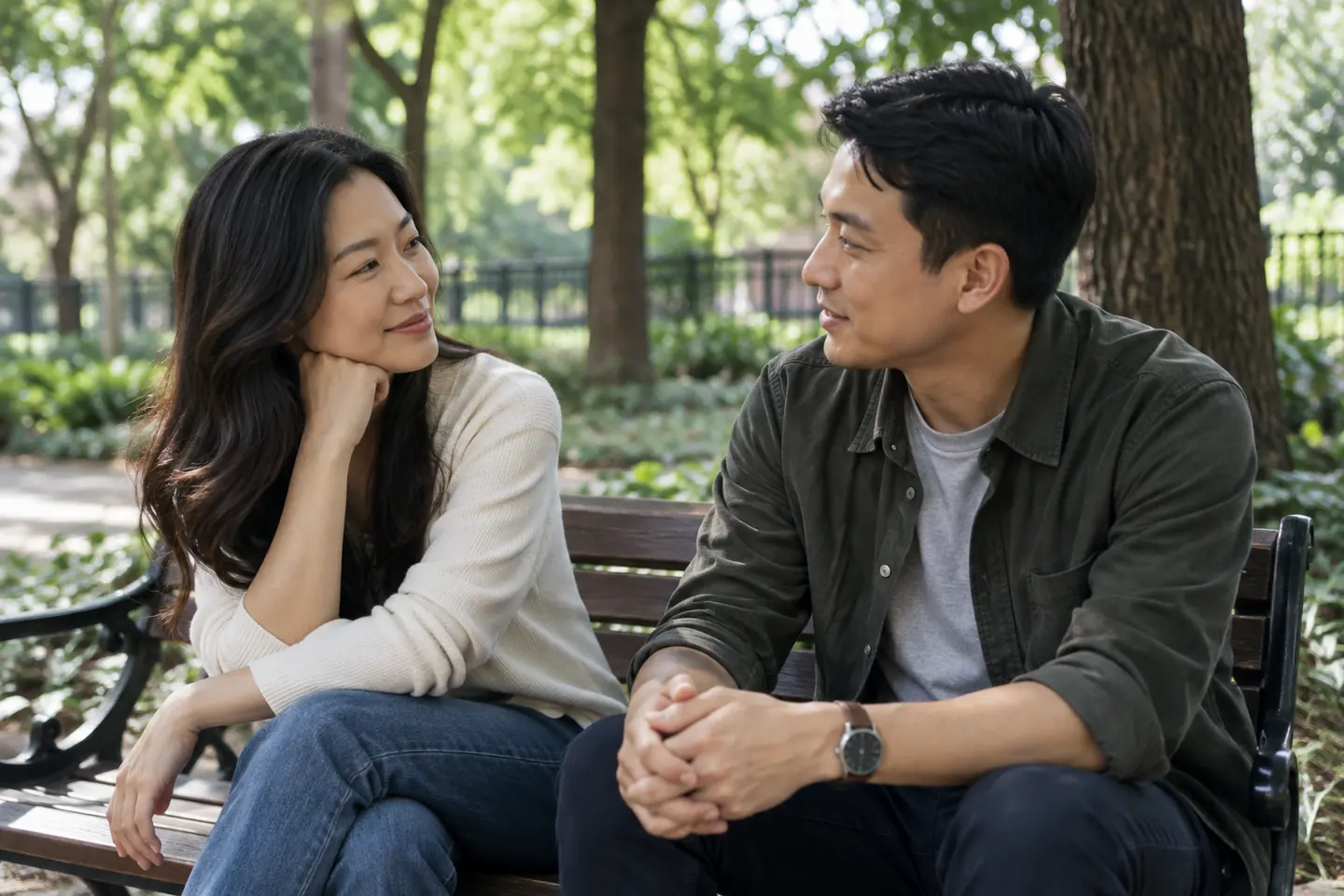
These are editorial recommendations for different preferences, not a national popularity chart, exercise prescription, or claim that active dates create better relationships. An active date can include sitting down, observing part of a lesson, or changing to a quieter activity. The park-bench illustration reflects that room for rest and conversation.
Choose a shared effort level before choosing the activity
“I like being active” can mean a gentle walk or demanding training. Ask what the person actually enjoys: “Would you prefer a short walk, an easy game, or a beginner class?” Discuss the surface, heat, shade, noise, changing facilities, transport, and access needs that matter to each of you. You do not need a health history to say what kind of outing works.
Vietnam Tourism’s Hanoi Dep Sound feature describes a cycling experience combining movement and cultural stops. It is an example of activity-based sightseeing, not confirmation that a route is quiet, beginner-friendly, traffic-free, or operating on your chosen day. Our suggestions below are separate planning choices. Check the current route or provider directly instead of treating promotional photographs as a risk assessment.
1. A short conversation walk with a seated finish
Choose this when the goal is spending time together rather than doing a workout. Agree on a short, familiar public stretch and a place to sit at the end. Use a time limit instead of a compulsory distance: “Shall we walk for about twenty minutes and then have a drink?” A timed plan is easier to shorten if one person tires or the weather changes.
Walk beside each other when space allows, and avoid forcing conversation while crossing roads or moving through crowds. A park path, a managed pedestrian area, or another suitable route still needs checking for surfaces, closures, shade, and busy times. A route that looks pleasant on a map may involve awkward crossings or stairs.
Keep your phone available for transport and essential communication, but stop walking before studying it. If the conversation is enjoyable, you can choose to continue together; that should be a fresh decision rather than pressure to complete an itinerary. Sitting down early does not spoil the date.
2. Casual badminton with a cooperative first round
Badminton suits two people who want a clear activity and do not mind a little practice. Ask a court or sports center about booking length, equipment, footwear rules, and whether coaching is needed for beginners. Avoid promising that spare rackets will be available without checking.
Start by keeping the shuttle moving rather than counting points. When one person is much more experienced, ask whether they are comfortable playing gently or whether a coached session would be more enjoyable. A competitive player may prefer an actual match on another day; that is a preference to discuss, not a reason to push a beginner harder.
Agree on breaks and how you will end the session. Do not film the other person missing a shot for a joke or post a sweaty photograph without permission. Bring what you need for your own comfort, and ask about water and changing facilities. If the court is crowded or the booking fails, an ordinary drink nearby is a complete alternative.
3. A beginner dance lesson with explicit contact choices
A structured beginner class can help when both people like music and want guidance. Confirm whether the lesson is genuinely for beginners, whether partners rotate, and whether physical contact is part of the instruction. A couple may book together and still be expected to dance with other participants; ask before paying.
Discuss comfort privately. Holding hands, touching a shoulder, or using a close dance position each requires willingness; agreeing to attend is not permission for every form of contact. Ask the instructor about alternatives if either person wants more space. Neither date needs to explain their preference to the whole room.
Learn the same basic sequence without trying to correct each other constantly. Let the instructor teach. If one person already dances, they can ask before offering help and accept “I would rather hear it from the teacher.” After class, talk about what felt fun or difficult instead of grading rhythm, confidence, or attractiveness.
4. An easy cycling route chosen for the less confident rider
Cycling can be pleasant for two experienced riders who agree on a manageable route. It is a poor surprise activity for someone who cannot ride comfortably or dislikes traffic. Start with the less confident person’s needs, and select a suitable controlled or traffic-free setting only when its current conditions are confirmed.
Ask a rental provider about bicycle size, condition, brakes, helmets, return point, and what happens if equipment fails. Check the whole route, including how you reach it. A quiet-looking destination does not help if getting there involves unfamiliar busy roads. Do not plan to provide navigation while the other person rides beyond their comfort.
Keep the outing short enough to turn back easily, with an agreed meeting point if you become separated. Stop safely before checking maps or taking photographs. A sightseeing audio tour, including the one described by Vietnam Tourism, should not be assumed suitable for your particular skill level simply because it is promoted to visitors. Choose another format if the route remains uncertain.
5. A coached movement class with room to adapt
A beginner class led by an appropriate instructor can suit people who prefer structure to navigating an outdoor route. This might be a gentle introductory movement session rather than a demanding fitness challenge. Ask the provider about the actual activities, pace, equipment, group size, access, and whether participants may pause or observe.
Do not book a class described as advanced and assume the teacher can redesign it for two beginners. Explain the practical requirements that matter and let each person decide whether the answer is enough. If an individual needs health advice about participation, that decision belongs with their own qualified professional, not a date trying to reassure them.
Avoid body comments and comparisons. “Was that pace comfortable?” is useful; remarks about weight, flexibility, or who looked strongest are not required. A class is not a promise to start training together or share a membership. Ask separately about another session after both people have had time to decide.
A complete active date can be small
Imagine two adults in Ho Chi Minh City who both mention enjoying badminton. One plays regularly; the other last tried it at school. They choose a beginner-friendly booked session only after the center confirms equipment and the format. They agree to practice cooperatively, take breaks, and finish with a short seated conversation. This is an illustrative plan, not a real couple’s experience.
If the center cannot confirm suitable arrangements, they choose a short public walk instead. If weather or travel makes that uncomfortable too, they postpone or meet indoors for a drink. They do not treat using the backup as evidence that someone lacks commitment. The purpose is a pleasant shared experience, not completing a training target.
Afterward, separate enjoyment of the activity from interest in the person. You can like someone and dislike the sport. Say, “I enjoyed spending time with you; next time I would prefer something quieter.” That gives the next invitation useful direction without pretending the entire session was perfect.
Related reading and source note
For discussing practical requirements, read accessible date planning in Vietnam. For a seated alternative, see planning a coffee date. If you need to change an agreed outing, use the guide to rescheduling a date.
Source: Vietnam Tourism, “Hanoi Dep Sound: Discover the Capital by Night on Two Wheels,” no publication date displayed; checked 7 November 2026. The five formats are Avo Dating Team’s editorial guidance. Provider availability, routes, weather, equipment, and suitability must be checked for the actual outing; no current conditions are inferred from the illustration.