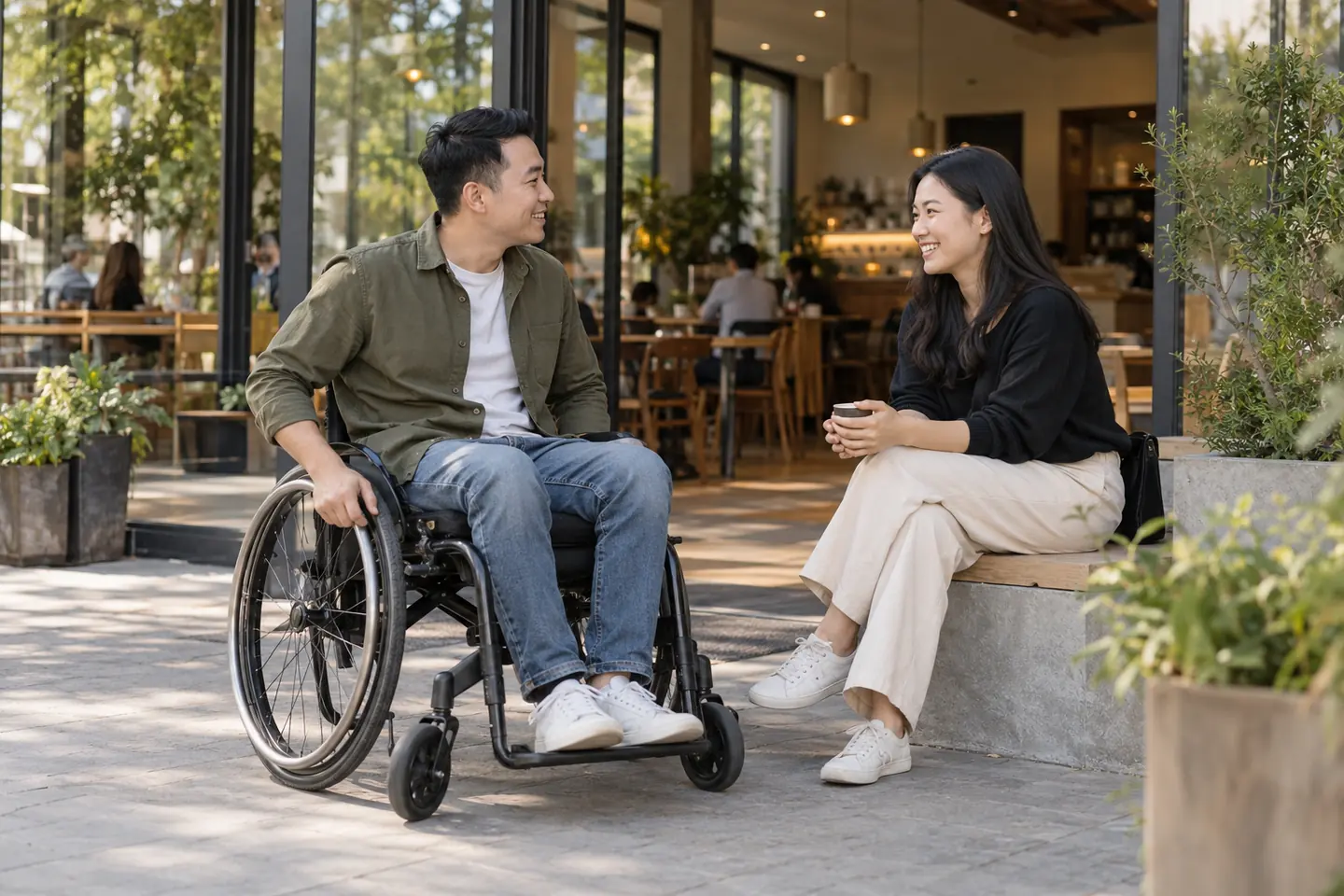
A considerate date plan begins with what makes the activity comfortable for both people. Access needs can concern steps, seating, noise, walking distance, or other details. Ask about the plan instead of making assumptions about someone’s body or asking them to provide a medical explanation.
Ask a practical, open question
“Is there anything about the place or activity that would help us plan comfortably?” lets the person choose what to share. Listen to the answer rather than deciding that an easier-looking activity must be better for them.
You can state your own needs too. A quiet table, an earlier meeting, or a shorter route can be part of ordinary planning. Nobody has to prove that a preference is serious enough to deserve consideration.
Check specific venue details
If relevant, ask the venue about the entrance, steps, lifts, seating, toilet access, and the route from the meeting point. A general claim that somewhere is accessible may not answer a particular person’s question. Confirm the details they actually need.
Do not book first and tell your date to work around the result. Our coffee-date guide can help keep the plan simple while you verify a suitable place.
Share information without taking control
Send the details you confirmed and let the other person assess them. Photos can help if the venue permits them, but they do not replace a conversation about what works.
Ask before offering physical assistance or touching a mobility aid. Accept “No, thank you” normally. Your date is a person you are meeting, not a task to manage or a story to tell friends afterward.
Keep an alternative available
Even a checked plan may need to change. Agree on a nearby alternative or a way to end without pressure. If the route or space does not work, acknowledge the problem without making someone feel responsible for spoiling the date.
Use the rescheduling guide if another day is better. Flexibility is useful when it follows the person’s stated needs rather than replacing their choice with yours.
Keep the conversation about two whole people
Talk about interests, humor, work, or whatever both want to discuss. A disclosed access need does not open the rest of someone’s health history to questions. Ask permission before changing to a personal topic.
Likewise, an offer of help does not imply permission for touch. Our physical-comfort guide can help you ask clearly. The aim is an enjoyable meeting in which both people retain their own decisions.
Common questions
What if I do not know the right terms? Ask respectfully what details would be useful and follow the person’s language about themselves.
Should I avoid suggesting active dates? Offer a choice and listen. Do not decide someone cannot enjoy an activity based only on appearance or an assumption.