For a cooking-class date in Vietnam, choose the lesson format before choosing the most photogenic kitchen. Our five best formats for different needs in 2026 are a short single-dish lesson, a market-and-cook session, a fully hands-on shared meal, a dietary-specific class, and a small demonstration with tasting. The best fit lets both people participate comfortably, understand the teaching, and know the full time commitment before paying.
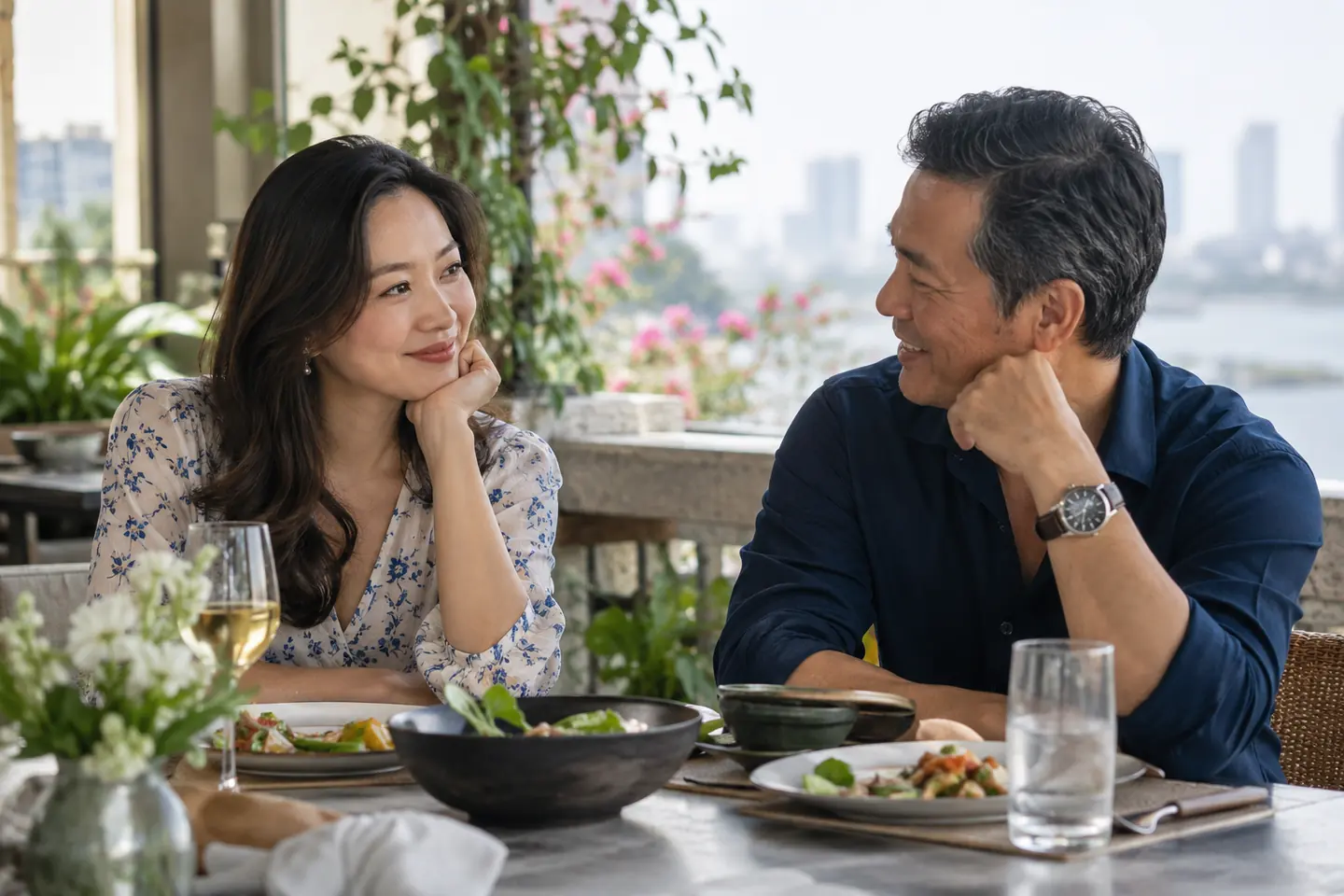
This guide compares formats rather than declaring a particular school the country’s best. A class can be enjoyable without being luxurious, private, or designed for couples. An ordinary public workshop can also be a more comfortable early date than cooking in someone’s home. The lunch illustration accompanying this article represents a planning conversation, not a documented cooking class.
How to compare the options fairly
Ask what you will actually do. “Cooking experience” might mean preparing ingredients yourself, watching a chef, visiting a market, traveling by boat, or eating dishes prepared largely by staff. Vietnam Tourism’s Hoi An guide includes cooking lessons among the town’s activities. As one operator example, Red Bridge’s own program page distinguishes half-day, longer, and evening formats. These sources demonstrate variety, not a national ranking or an endorsement of today’s availability.
Our editorial choices prioritize participation, realistic duration, transparent inclusions, and comfort with ingredients. Before booking, confirm the current menu, teaching language, location, cancellation terms, accessibility, transport, and total price directly. A listing that says “suitable for beginners” does not establish that it meets a particular dietary or access need.
1. A short single-dish lesson for an early date
A focused lesson suits two people who are still learning whether they enjoy spending time together. Look for one manageable dish or technique rather than a long menu. You might compare how you season a filling, shape a small item, or assemble a plate while the instructor handles unfamiliar equipment.
Ask how much of the advertised duration is practical work, eating, or waiting. If one person must leave after work, a precise end time matters more than the phrase “evening class.” Confirm whether food is enough for a meal or only a tasting; otherwise you may finish hungry with no agreed plan for dinner.
Avoid using skill as a test. Someone who cooks daily may still be unfamiliar with the particular technique, and a beginner should not be teased for asking for help. Share the jobs by preference instead of assigning all cutting or cleaning to one person. A successful short lesson leaves both people with something they tried themselves.
2. A market-and-cook session for people who enjoy the whole process
This format adds ingredient selection and local context before the kitchen portion. It can suit a later date when both people already know they enjoy a longer outing. The market gives you concrete things to notice and discuss, but crowds, standing, weather, and the journey between stops all become part of the date.
Ask for the actual sequence. Where do you meet? Is transport included? Will you walk between locations, travel on a boat, or return to a different point? At Red Bridge, the operator describes market and river components in some programs; do not assume every cooking school includes them or that every program from the same school is identical.
Let vendors carry on their work. Ask before photographing a person or holding up a transaction for a couple picture. If one date dislikes crowded markets, choose a kitchen-only lesson rather than persuading them that the market is essential to an authentic experience. Comfort is a valid selection criterion.
3. A hands-on shared meal for two willing collaborators
A multi-dish lesson works best when both people genuinely want to cook. Ask whether participants have individual stations, work in pairs, or divide tasks across a large group. Two tickets do not guarantee two sets of equipment or equal time at the stove. The details determine whether you will collaborate or mostly watch others.
Talk about how you like to learn. One person may want to follow the recipe closely while the other experiments. For a class, following the instructor’s method is a simple shared starting point; you can discuss changes later. Do not take over the other person’s task to make the dish faster or more attractive.
Pay attention to the working arrangement rather than interpreting a spilled ingredient as a relationship sign. Can you ask for space, laugh at a small mistake without humiliating anyone, and accept correction from the instructor? These are useful observations, but one busy kitchen session cannot prove how someone will behave in a shared household.
4. A dietary-specific class when ingredients determine comfort
Choose this option when a standard menu would require many substitutions. A vegetarian class, for example, may be simpler than repeatedly asking to remove meat from several dishes. However, a label alone does not answer questions about sauces, shared equipment, or the ingredients used in preparation.
Contact the school with the actual requirement and ask for a clear answer. Do not promise your date that “they can probably change it.” The person with the requirement decides whether the response is sufficient. If the provider cannot confirm something important, choose another activity; no one needs to accept uncertainty to avoid disappointing a new partner.
Food handling also matters in any format. The WHO Five Keys to Safer Food manual covers cleanliness, separating raw and cooked ingredients, thorough cooking, temperatures, and safe materials. Follow the instructor’s food-safety directions, and ask rather than improvise when unsure. This is general guidance, not an assessment of a particular kitchen or advice about an individual’s allergy.
5. A demonstration and tasting for a conversation-focused outing
Not everyone wants knives, heat, or a demanding practical task on a date. A small demonstration can provide the pleasure of learning and eating with fewer tasks. It is especially suitable when both people prefer observing and discussing techniques. It should be advertised honestly as a demonstration, not sold as extensive hands-on cooking.
Ask about seating and sightlines. Can everyone see the preparation? Is the commentary understandable to both dates? Will there be time for questions? If the chef is speaking a language only one person understands, that person may spend the whole visit translating rather than enjoying it.
Check what is tasted, how it is served, and whether there is any additional meal charge. You can discuss a technique you want to try later without immediately planning to visit each other’s home. The class is a complete date by itself. A provider’s invitation to buy equipment or ingredients is optional, and declining does not make you an unenthusiastic participant.
Build one plan without turning it into a full-day obligation
Consider this illustrative example: two adults visiting Hoi An both like food, but one has only an evening free. They first compare a market itinerary with a kitchen-only lesson. They choose the shorter lesson after confirming the current end time, ingredients, teaching language, and whether dinner is included. Each pays for their own place, and they agree where to meet outside the venue.
They also decide what happens if the class is canceled. Their backup is a nearby restaurant with a menu they have both reviewed, not an automatic move to one person’s accommodation. If the replacement costs more, they ask again before confirming it. No real customer or particular class booking is represented by this example.
Afterward, ask what part each person enjoyed: choosing ingredients, working together, learning a technique, or simply sharing the meal. That answer can guide the next date. If cooking was stressful, a relaxed meal remains a good option. You do not need to repeat an activity simply because you now own a recipe sheet.
Related reading and source note
Before choosing a menu, read dating with different food preferences. For another guided activity, see planning a pottery workshop date. To build the next outing from what you learned, browse second-date planning in Vietnam.
Sources: Vietnam Tourism, “10 essential things to do in Hoi An,” and Red Bridge Cooking School’s program page, both undated; WHO, “Five keys to safer food manual,” published 15 May 2006. All checked 7 November 2026. Prices and operating schedules are intentionally left for direct confirmation. The five choices are editorial recommendations for different preferences.